
Clients of ours often inquire: what if another person’s conduct puts me at risk for harm in the future?
Examples include:
 A doctor who carelessly orders numerous x-rays of the patient’s chest, putting her at risk of harm for cancer. But no cancer occurred, not yet at least.
 - Or maybe the patient does contract lung cancer following the x-rays mentioned above, but she’s also a smoker. Granted, the x-rays may have put her at risk of lung cancer, but it might never be crystal clear, even with expert testimony.
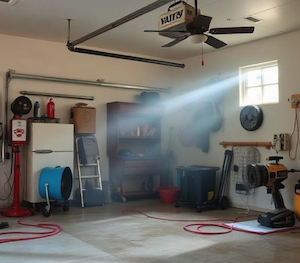
- A contractor — hired to do home improvement — carelessly uses outdoor concrete sealant in the plaintiff’s indoor garage, creating dangerous fumes, putting the plaintiff and her family at risk for respiratory problems.
Can PA’s “increased risk of harm” doctrine create liability in any scenario above?
Scenario One: There Is a Future Risk, but No Present Disease or Injury
If the person has not (yet) developed the disease or suffered another physical injury, an increased risk generally does not support an award of ordinary personal-injury damages. In some toxic-exposure cases, however, the person may be able to pursue the cost of medical monitoring. See Redland Soccer Club, Inc. v. Department of the Army, 548 Pa. 178, 696 A.2d 137 (1997).
In Redland, children and adults alleged that they had been exposed to hazardous substances while using soccer fields constructed on or near a contaminated former Army disposal site. Although the plaintiffs had not necessarily developed diseases from the exposure, they sought a medical-monitoring fund to pay for periodic examinations and testing. The Pennsylvania Supreme Court recognized a common-law medical-monitoring claim and established seven elements that a claimant must prove. Id. at 195–96, 696 A.2d at 145–46. Thus, in a qualifying toxic-exposure case, Pennsylvania law may permit medical monitoring even before the feared disease becomes symptomatic.
Scenario Two: The Physical Harm Has Already Occurred
If the physical harm has already occurred, the increased-risk-of-harm doctrine may help the injured person prove that the defendant’s negligence was a factual cause of that harm. The doctrine is most often used in medical-malpractice cases in which several possible causes make absolute certainty impossible.
For example, assume a patient already has cancer. A physician then negligently fails to diagnose it. By the time another doctor discovers the cancer, it has progressed and the patient’s chance of survival has fallen. Because cancer can progress even with proper care, an expert may be unable to say with certainty that the delay alone caused the patient’s worsening condition.
Pennsylvania’s increased-risk-of-harm doctrine addresses that problem. It does not eliminate causation. Instead, it permits causation to go to the jury when the evidence shows:
- the defendant failed to exercise reasonable care;
- that failure increased the risk of the type of physical harm the plaintiff suffered; and
- that physical harm actually occurred.
The expert must supply a competent medical basis for finding that the negligent conduct could have caused, or increased the risk of, the type of harm involved. Then the jury must decide, by a preponderance of the evidence, whether the negligence was a factual cause—or substantial factor—in bringing about the actual harm.
Thus, the doctrine relaxes the plaintiff’s evidentiary burden in an appropriate case, but it does not erase the causation requirement. Negligence plus injury is not automatically enough.
Pennsylvania’s Superior Court recently applied that doctrine in Smith v. Timar, 2026 PA Super 198 (Pa. Super. Ct. 2026), a precedential decision filed on September 9, 2026.
Smith v. Timar
In this new precedential opinion, the Pennsylvania Superior Court addressed when a patient is entitled to a jury instruction on the “increased risk of harm” doctrine.
The doctrine applies when negligence may have combined with other possible causes to produce a physical injury. In reality, an expert reviewing a case may find that — based on the current state of science — it difficulty to opine that there was just one single negligent act that directly and exclusively caused of the injury. In such cases, the expert’s opinion may be limited to whether any given negligent act at least increased the risk of the type of harm that actually occurred. Then, the jury may decide whether the negligence was a factual cause of that harm.
Importantly, the doctrine does not eliminate causation. It changes how causation may be proven in a case involving medical uncertainty.
The Facts in Smith
Ryan Smith visited chiropractor Andrew Timar for mild lower-back pain. According to Smith, he did not complain of neck pain. Nevertheless, Timar performed cervical spinal manipulations—quick movements of Smith’s neck to each side.
Smith later suffered a vertebral artery dissection. This is a tear in an artery that supplies blood to the brain. The dissection caused a stroke, which left Smith with permanent impairments. Those problems included weakness and altered sensation, facial drooping, impaired vision, and occasional dragging of his left foot.
The parties agreed that the artery dissection caused the stroke. However, they sharply disagreed over what caused the dissection.
Smith’s neurologist testified that cervical manipulation creates shearing forces on the vertebral arteries and increases the risk of dissection. He explained that trauma can weaken an artery wall without causing it to tear immediately. The tear may develop days later.
The defense experts disagreed. They testified that Smith’s dissection occurred in the V4 portion of the artery, which is located inside the skull. In their opinions, a chiropractor could not cause an isolated V4 dissection by manipulating the neck. They suggested that the dissection occurred spontaneously because of an underlying weakness or another natural process.
After trial, the jury found that Timar was negligent. However, it also found that his negligence was not a factual cause of Smith’s injury. Therefore, Smith recovered nothing.
The trial judge had refused Smith’s request for an increased-risk-of-harm instruction. The judge believed the instruction would confuse the jury. Smith appealed.
The Superior Court’s Decision
The Superior Court held that Smith was entitled to the requested instruction. It therefore vacated the judgment and ordered a new trial. However, the new trial would be limited to causation and damages, since a jury already found negligence.
The court applied a three-part test stated in an earlier Superior Court decision, Vogelsberger v. Magee-Womens Hospital of UPMC Health System, 903 A.2d 540 (Pa. Super. Ct. 2006). An increased-risk instruction is appropriate when there is sufficient evidence that:
- the defendant failed to exercise reasonable care;
- that failure increased the risk of physical harm to the plaintiff (typically through expert evidence); and
- that physical harm actually occurred.
Once the plaintiff presents sufficient evidence of those points, the jury decides whether the defendant’s negligence was a factual cause, or substantial factor, in producing the injury.
The Superior Court concluded that Smith satisfied the test. First, the jury had already found Timar negligent. Second, Smith presented expert testimony that the unnecessary neck manipulation increased the risk of a vertebral artery dissection. Third, Smith actually suffered that type of dissection.
The court emphasized that several possible causes of an injury do not automatically defeat the plaintiff’s claim. Timar’s negligence, if accepted by the jury as an increased risk, “added one to the list” of possible causes. The competing expert opinions created a question for the jury, not a reason to withhold the increased-risk instruction.
Moreover, the error was not harmless. The jury found negligence but rejected factual causation without being told how increased-risk evidence could establish causation. As a result, the jury never had an opportunity to evaluate Smith’s theory under the correct legal standard.
At the same time, the Superior Court did not find that Timar caused the dissection. Instead, it directed that a new jury decide causation after receiving the proper instruction.
Does the Doctrine Apply Outside Medical Malpractice?
The doctrine grew from Section 323 of the Restatement (Second) of Torts, which concerns negligent performance of an undertaking to provide services necessary for another person’s protection. Its underlying principle is therefore not confined by its language to physicians.
However, Pennsylvania appellate decisions have developed the doctrine mainly in cases involving medical treatment and actual physical harm. It should not be treated as a general substitute for ordinary causation in every negligence case.
Here are cases we handled, where courts have yet to rule on the applicability of the above doctrine:
- A contractor who negligently leaves a dangerous opening in a floor and someone falls through it. If ordinary evidence can show that the unsafe condition caused the fall, the increased-risk doctrine is unnecessary. The case can proceed under traditional negligence principles.
- A hidden leak and mold exposure present a closer—but more uncertain—example. Suppose a contractor negligently damages a pipe inside a wall. Moisture and mold accumulate, and an occupant with asthma later suffers a documented respiratory worsening. A qualified expert may be able to testify that the mold exposure increased the risk of the type of respiratory injury that actually occurred, even if other factors also could have contributed. That resembles the reasoning behind increased-risk cases. We were able to settle the case before any court ruled on the “increased risk of harm” applicability.
- A home improvement contractor uses the wrong type of sealant in a garage (scenario #3, above), which is connected to the plaintiffs’ home. Plaintiffs suffer respiratory problems.
However, whether a Pennsylvania court would apply the doctrine in any of the above scenarios would depend on the pleaded duty, the evidence, and the relevant precedent. It should not be presented as settled law.
By contrast, if the occupant has no symptoms and only fears becoming ill someday, the Smith doctrine does not supply the missing injury. The potential remedy, if the exposure and scientific evidence satisfy Pennsylvania’s demanding requirements, would more likely be medical monitoring under Redland.
Conclusion
The increased risk of harm doctrine can create an avenue for recovery in certain, narrow instances. Talk to one of our lawyers to understand how these concepts may apply in your particular case.
Let’s Get Started!
Contact our attorneys today!
412.342.0992