
 In Richardson v. Parks, No. 414 EDA 2025 (Pa. Super. May 12, 2026) (non-precedential), the Pennsylvania Superior Court delivered a decision that should serve as a cautionary reminder to trial lawyers and litigants alike:
-
-
- preserve issues for appeal,
- know that the trial judge can act hostile, unfair, or even openly antagonistic toward a party, but it does not guaranty the party will get a new trial, and
- know that punitive damages need not be “proportionate” to actual damages, nor will the courts apply a cap or use a fixed multiplier.
-
The Underlying Facts
Factually, Valerie Parks allegedly:
- forged a $50,000 check belonging to the decedent, Algie Richardson,
- withdrew additional funds from his accounts, and
- charged purchases to his credit card around the time of his death.
The administratrix of the estate filed suit alleging conversion and seeking both compensatory and punitive damages. A default judgment was entered after Parks failed to respond to the complaint. Although she later sought to open the default judgment, the petition was denied.
Following an assessment of damages hearing, the trial court awarded:
- $51,494.85 in compensatory damages;
- $6,871.97 in interest; and
- $50,000 in punitive damages.
The defendant appealed, arguing primarily that the punitive damages award was excessive and that the trial court’s conduct toward defense counsel demonstrated bias and prejudice.
The Superior Court Rejects the Punitive Damages Challenge
The Superior Court affirmed.
In doing so, it correctly summarized Pennsylvania punitive damages law by relying on Bert Co. v. Turk, 298 A.3d 44 (Pa. 2023), in which the Pennsylvania Supreme Court reiterated several foundational principles:
- Punitive damages are intended to punish and deter wrongful conduct;
- Punitive damages are penal, not compensatory;
- Pennsylvania does not impose a strict numerical cap or fixed ratio in ordinary tort cases;
- There is no bright-line constitutional rule prohibiting punitive damages above any specific multiplier.
Forget “Proportions”
The Superior Court specifically noted that while extremely high ratios (ten times or more) may trigger judicial scrutiny, there is no automatic rule rendering punitive damages unconstitutional merely because they exceed a single-digit ratio. Nor is there any requirement that punitive damages be “proportionate” to actual damages.
Instead, courts examine:
- The reprehensibility of the conduct;
- The relationship between punitive and compensatory damages;
- Comparable civil penalties and deterrence considerations.
Even under federal constitutional jurisprudence, there is no hard ten-times cap.
Indeed, Bert Co. itself rejected the notion that punitive damages become unconstitutional merely because they exceed a particular ratio. The Pennsylvania Supreme Court expressly explained that there is “no bright line ratio” that punitive damages cannot exceed.
In Richardson, the punitive award was actually less than the compensatory damages award — effectively below a 1:1 ratio — making the challenge particularly weak under existing Pennsylvania law.
The Superior Court also rejected the defendant’s argument that punitive damages were improper because she was allegedly indigent or lacked insurance coverage. Citing prior Pennsylvania precedent, the Court reiterated that evidence of wealth is relevant to the amount of punitive damages, but it is not required in order to sustain such an award.
The More Important Lesson: Judicial Bias Claims Must Be Raised Immediately
The most practically significant portion of the opinion may be the Court’s treatment of the judicial bias issue.
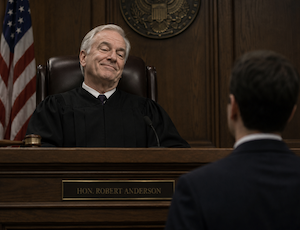
Defense counsel argued that the trial judge displayed hostility and contempt toward him during the damages hearing. The appellate brief pointed to several exchanges in which the judge allegedly spoke sharply to counsel, interrupted him, or treated him dismissively.
Standing alone, many lawyers reading the transcript might sympathize with the concern. Trial judges are human beings. Courtroom tension exists. At times judges may appear impatient, irritated, or even openly annoyed with counsel.
But none of that matters unless the issue is preserved prior to appeal.
Raising Timely Objections
Relying on Reilly v. SEPTA, 489 A.2d 1291 (Pa. 1985), and Goodheart v. Casey, 565 A.2d 757 (Pa. 1989), the Court reiterated a rule that Pennsylvania appellate courts apply rigorously:
Claims of judicial prejudice or bias cannot be raised for the first time in post-trial motions or on appeal.
Instead, the allegedly biased conduct must be brought to the attention of the same judge during the proceedings themselves through a timely objection, petition, or motion for recusal.
The rationale is institutional as much as procedural. Pennsylvania law presumes that if counsel fails to object contemporaneously, the judge may properly assume the parties do not actually view the conduct as disqualifying.
That creates an uncomfortable reality for trial lawyers.
The Tactical Trap Facing Trial Lawyers
 From a practical standpoint, many litigators hesitate to accuse a sitting trial judge of bias while actively litigating before that same judge. The fear is obvious. If the judge already appears irritated, hostile, or impatient, formally accusing the judge of prejudice may further inflame the situation and worsen the client’s position.
Yet Richardson illustrates the harsh procedural consequence of remaining silent: the appellate court may never consider the issue at all.
Pennsylvania courts consistently enforce waiver principles in recusal and judicial bias claims. Once counsel becomes aware of the alleged prejudice, the issue must be raised promptly before the trial judge. Waiting until post-trial motions or appeal is generally fatal.
That reality often places attorneys in a deeply uncomfortable position:
- Raise the issue immediately and risk antagonizing the trial judge further; or
- Preserve courtroom harmony temporarily but risk permanently waiving the issue on appeal.
The Superior Court’s decision reinforces that Pennsylvania law chooses preservation over comfort.
But even if the issue had been preserved, would it have made a difference?
Reversal is Rarely Where Judge Appeared “Hostile”
In Richardson, even if one accepted the defense characterization of the judge’s tone toward counsel, the Superior Court still emphasized that the record contained substantial evidence supporting punitive damages independently of any alleged hostility.
In other words, the evidence supported an award of punitive damages, apart from any claim of judicial bias.
Thus, the Superior Court noted that — even if the issue of alleged biased had been preserved — the Superior Court refused to disturb the judgment for punitive damages:
“However, even if Appellant had not waived her claim, we agree with the trial court that the award of punitive damages was not the product of any bias towards Appellant’s counsel. See Trial Ct. Op. at 13-14.”
Conclusions
The case ultimately stands as less of a dramatic punitive damages decision and more as a practical appellate preservation case.
The opinion teaches several important lessons:
1. Punitive damages are not subject to a rigid mathematical formula.
Pennsylvania continues to reject any automatic constitutional cap or fixed proportionality requirement. Punitive damages greater than compensatory damages — even substantially greater — are not automatically unconstitutional.
2. Preservation rules matter more than perceived fairness.
Even strong complaints about judicial conduct may be waived if not raised contemporaneously.
3. Appellate courts defer heavily to trial judges.
A litigant should never assume an appellate court will reverse simply because a transcript appears tense or because counsel believes the judge acted unfairly.
4. Recusal issues must be raised before the same judge.
That may feel strategically dangerous, but Pennsylvania law requires it.
Let’s Get Started!
Contact us today to schedule a consultation.