
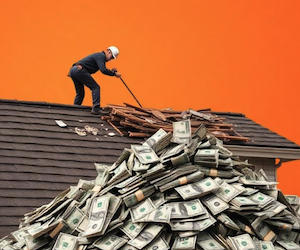
After every major storm, homeowners across Pennsylvania are approached by contractors offering what sounds like an easy solution:
“Your property (often a roof) has storm damage.”
“Insurance will cover it.”
“The repairs will be free, except maybe your deductible.”
Sometimes those statements turn out to be true.
Many times, they do not.
The problem is not simply that the contractor may be mistaken. The problem is that the homeowner often bears nearly all of the risk if the contractor’s promises about insurance coverage prove to be wrong.
Before signing any contract or allowing a contractor to submit an insurance claim on your behalf, it is important to understand how homeowners insurance actually works—and why no contractor can honestly guarantee that your insurance company will pay for a repair without first reviewing your policy and having the claim evaluated by the insurer.
Coverage Depends on Your Policy—Not the Contractor’s Opinion
Many homeowners mistakenly believe that if damage was caused by a storm, insurance automatically covers the repair.
It does not.
Coverage depends upon the language of your particular insurance policy, the exclusions contained within that policy, the age and condition of the damaged property, the cause of the damage, your deductible, endorsements, and sometimes even where your property is located.
For example, Progressive Insurance explains that homeowners insurance may cover roof damage caused by covered perils such as wind, hail, fire, lightning, or falling objects. However, it also explains that many common causes of roof damage are not covered, including:
- Normal wear and tear
- Poor maintenance
- Neglect
- Flood damage
- Earthquake damage
- Damage caused by animals
Progressive notes an important limitation that many homeowners never consider: geographic location matters. In some areas that are prone to hurricanes or tornadoes, policies may exclude wind or hail coverage altogether or impose separate, higher deductibles for those losses.
That same principle applies throughout Pennsylvania.
For example, Western Pennsylvania’s hillsides are susceptible to landslides and ground movement, hazards that are often excluded or separately insured. Likewise, insurers may apply different underwriting rules or limitations for properties exposed to recurring wind events, older roofs, or other localized risks.
The point is simple:
A contractor standing in your driveway cannot possibly know whether your insurance company will pay your claim without first reviewing your policy and allowing the insurer to investigate the claim.
If the contractor promises otherwise, you should be skeptical.
Don’t Just Rely on the Right to Rescind
PA’s Home Improvement and Consumer Protection Act (HICPA) grants a homeowner three (3) days to cancel a home improvement contract. However, it often takes four to six weeks for a homeowner insurance carrier — such as State Farm or Progressive — to process a claim for “storm damage.”
By then, the three day grace period to rescind will have long since expired, making the homeowner liable to the terms of a home improvement contract, potentially.
Read the Contractor’s Contract Carefully
Many contractors aggressively market themselves by emphasizing insurance claims.
Yet when homeowners actually read the written contract, they often discover language very different from the sales presentation.
Many contracts expressly state that:
- the contractor does not guarantee insurance coverage;
- payment remains the homeowner’s responsibility if insurance denies the claim; or
- the homeowner agrees to pay the contract price regardless of the insurance company’s decision.
 In other words, the contractor’s oral promise that “insurance will pay” may disappear once the written agreement is signed.
That distinction matters.
Importantly, if insurance refuses coverage and you have already signed the contract, you may still owe thousands—or even tens of thousands—of dollars.
If You Cannot Pay, the Contractor May Pursue Collection
If a homeowner cannot pay after insurance denies the claim, the contractor may pursue legal remedies, including:
- filing a lawsuit for breach of contract;
- seeking collection costs;
- reporting the debt to collections; or
- filing a mechanic’s lien against the property where Pennsylvania law allows.
The homeowner who believed the repairs would be “free” may suddenly face substantial financial exposure.
Filing an Insurance Claim Is Not Risk-Free
Another fact many homeowners never learn until it is too late is that simply filing an insurance claim may have consequences—even if the claim is denied.
Insurance companies maintain extensive databases tracking claims history.
One of the best-known systems is the Comprehensive Loss Underwriting Exchange (CLUE) maintained by LexisNexis Risk Solutions. Insurers use CLUE reports and similar databases to evaluate applicants and assess future risk.
In addition, insurers use systems such as Claims Discovery to identify prior claims, investigate potential fraud, and evaluate underwriting risks.
Although these systems serve legitimate purposes, they also mean that claims history can follow a homeowner long after a particular claim is closed.
That history may influence:
- Future premiums
- Renewal decisions
- Eligibility for certain insurance products
- Rates offered by entirely different insurance companies
Many homeowners submit what they believe will be a “free roof” claim only to discover later that:
- the claim was denied;
- the roof still needs repair;
- the claim remains part of their insurance history; and
- obtaining lower insurance premiums in the future becomes more difficult.
None of those consequences are typically mentioned by the contractor making the sales pitch.
Pennsylvania Has Warned About Storm-Chasing Contractors
The Commonwealth of Pennsylvania has repeatedly warned homeowners to be cautious following major storms because contractor scams become increasingly common during these periods.
Common warning signs include:
- unsolicited door-to-door sales;
- high-pressure tactics;
- promises that insurance will “cover everything”;
- requests to sign contracts immediately;
- demands for large upfront payments; and
- discouraging homeowners from contacting their insurance company before signing.
The Pennsylvania Insurance Department recommends documenting damage, contacting your insurer promptly, obtaining multiple estimates, and carefully reviewing any proposed repair contract before agreeing to work.
If You Were Misled, You May Have Legal Remedies
When a contractor makes false statements to induce a homeowner to sign a contract, Pennsylvania law may provide several potential remedies.
Depending upon the facts, claims may include:
- breach of contract;
- fraudulent or negligent misrepresentation;
- violations of Pennsylvania’s Home Improvement Consumer Protection Act (HICPA); and
- violations of Pennsylvania’s Unfair Trade Practices and Consumer Protection Law (UTPCPL), 73 P.S. §§ 201-1 to 201-9.3.
Importantly, Pennsylvania appellate courts have repeatedly described the UTPCPL’s prohibition against deceptive conduct as imposing strict liability for deceptive conduct in appropriate circumstances. A contractor does not necessarily avoid liability simply by arguing that a false statement was made without malicious intent.
Successful plaintiffs may, in appropriate cases, recover actual damages, attorney’s fees, court costs, and potentially treble damages under the UTPCPL.
However, obtaining a judgment is only part of the battle.
As lawyers sometimes say, there can be a long walk from the courthouse to the bank.
Winning a lawsuit does not automatically result in collecting the judgment.
A contractor willing to make reckless promises about insurance coverage may also lack sufficient assets or insurance to satisfy a judgment after the fact.
The Best Lawsuit Is the One You Never Have to File
The safest course is careful investigation before signing any contract.
Homeowners should:
- Contact their insurance company before authorizing repairs.
- Read the insurance policy or ask the insurer whether the claimed damage is potentially covered.
- Obtain multiple estimates.
- Read every page of the proposed contract.
- Never rely solely upon oral promises regarding insurance coverage.
- Verify that the contractor is properly registered and insured.
- Be especially cautious of contractors who appear immediately after major storms and pressure homeowners into making quick decisions.
Whenever possible, consider hiring established contractors with a longstanding local reputation and sufficient assets or insurance to stand behind their work. While no contractor is immune from mistakes, established businesses generally have more to lose from deceptive practices and are often better positioned to satisfy legitimate claims if something goes wrong.
Final Thoughts
Storm damage can create urgency, and urgency often creates opportunities for dishonest contractors.
A contractor’s promise that “insurance will pay for everything” is not the same as an insurance company’s agreement to provide coverage.
Until your insurer reviews the claim under the terms of your policy, no one can honestly guarantee that your repairs will be covered.
A storm-chasing contractor may move on to the next neighborhood long before the insurance company denies the claim or sends only partial payment. Outright fraud does occur. Unfortunately, the homeowner is often left to deal with the unpaid bill, a potential mechanic’s lien, increased insurance costs, and expensive litigation.
The best way to win against a dishonest contractor is often to avoid hiring one in the first place.
Let’s Get Started!
Contact us today about your matter in PA!
412.342.0992