Servicing Papers in PA State Court Civil Cases
 You might wonder: why is service of legal papers so important in Pennsylvania? And, what constitutes “good service” in PA state court cases?
The answers depends on whether we’re talking about serving the lawsuit, itself, or subsequent papers in the case.
The law treats each very differently.
Types of Service
When one party sues another in Pennsylvania’s Court of Common Pleas, one of the key legal steps is service of process. So what’s that? It’s a fancy way of saying: giving the defendant notice of the lawsuit. The beginning a case is critical. It’s when the court pulls the Defendant into a dispute where the court can take away the Defendant’s rights. Or, the court can order the defendant to pay money. When served properly, the Defendant must file a timely response. Otherwise, the court may enter a default judgment, depriving the Defendant’s right to be heard in court. As such, the Defendant’s constitutional “due process” rights require that the Plaintiff follow strict rules when serving original process.
So what are PA’s strict rules?
1. Serving Original Process in Pennsylvania
In-State Defendants.
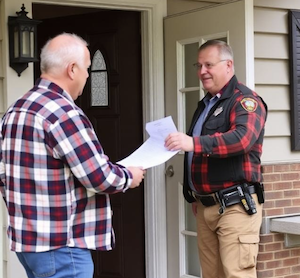 In most civil lawsuits in PA state court, the Rules of Civil Procedure require that original process be served by the county sheriff when the defendant lives inside Pennsylvania. See Pennsylvania Rule of Civil Procedure 400. In fact, Rule 400(a) provides that, except for a few limited exceptions, the original process within the Commonwealth must be served by the sheriff.
Here’s what that means:
- Rule 400 requires the sheriff to hand-deliver the complaint and summons to the defendant. This can include hand-delivery on a household member or the defendant’s agent, if it’s a business.
- If the Defendant lives in PA, but in a different county from the lawsuit, things get even more complicated. The sheriff (where suit has been filed) must deputize the sheriff in the county where the Defendant is located.
- Then, once service is completed, the sheriff files a return of service with the court describing when, where, and how service was done.
Thus, unless some special exception exists (such as a court order allowing for alternate service), you cannot just mail the original complaint and summons by regular mail to an in-state individual to start the lawsuit.
Out-of-State Defendants
 If a defendant lives outside Pennsylvania, the rules allow service by mail in certain circumstances. Pennsylvania Rule 404 provides that the plaintiff must serve original process outside the Commonwealth within 90 days and may be delivered:
- By a competent adult using the normal service methods (similar to Rule 402), or
- By mail in the manner provided by Rule 403.
Rule 403 describes how service by mail must be done:
- The plaintiff must send the process by a USPS method that requires a signed receipt (e.g., certified mail with return receipt).
- Service is considered complete only when the mail is delivered and signed for by the defendant or their authorized agent.
So for out-of-state defendants, mailing with a requested signed return receipt is the accepted method under state rules — but it still must comply precisely with the rules.
Special Notes About Service of Original Process
A plaintiff serving suit may also need to protect the statute of limitations. Filing suit is not enough. The courts also require effective service. This means the plaintiff must follow even more technical rules, if they want their suit to protect the statute of limitations.
- The return of service must be filed with the court and typically includes the date/time/place of service and who was served.
- The Plaintiff must make “reasonable efforts” to get service of original process served. It’s not enough to say, “I don’t know the defendant’s address.” And, for instate Defendants, just giving the lawsuit to the Sheriff is not enough. The Plaintiff must pay the sheriff’s fee and authorize service, without telling the sheriff to “hold” service while you try to settle the case. Otherwise, a court could find that the lawsuit, as filed, will not protect the statute of limitations. In other words, for a suit to be deemed “filed” as to protect the statute of limitations, the Plaintiff must also make a “reasonable effort” to locate and serve the Defendant, properly, even when discussing in settlement negotiations. See interpreting Lamp v. Heyman.
2. Service of Subsequent Papers (Answer, Motions, etc.)
Once the lawsuit is underway, the parties serving later legal papers will face a much less formal than service of original process. Such papers include:
- Motions
- Preliminary objections
- Written discovery (requesting information, documents, or deposition testimony) or
- a Pretrial statement (listing witnesses for trial).
For these, no sheriff or “certified service” is needed. You don’t even need the document post-marked by a certain date. See Pennsylvania Rule of Civil Procedure 440. The party serving such documents need only:
- mail a copy to the other party or their attorney at the address listed on the court docket or on a prior filing.
- include a “certificate service,” indicating the date you dropped the document in the mail.
That’s it!
Importantly, the date of service for these later papers is the date you mail them. It’s irrelevant when the other side actually received service.
Thus, importantly, service by mail of these subsequent papers is considered complete when mailed. You don’t need a return receipt. You need only include a “certificate of service,” as mentioned. But talk to a lawyer about this. An important deadline might govern your case. For example, if you’re moving to dismiss a case, you must serve your motion by the deadline. Otherwise, the court may deny your motion.
3. Why the New Federal Postal Rule Has
No Effect in PA Court
Effective December 24, 2025, a new postal rule published in the Federal Register (2025-20740) changes how and when the USPS treats something as “postmarked.” But that new rule applies to the postal system — not to Pennsylvania state court procedure.
Here’s why it doesn’t change things. Remember: Pennsylvania’s Rules of Civil Procedure define when service is complete for legal papers (mailing equals service). As mentioned, those rules focus on your certificate of service and the date you mailed the document — not on the USPS postmark or delivery date.
Final Tip
You should get guidance from a lawyer about how to best serve anything. Strict rules govern service of the original process. After that, the rules are much less strict, but very important. For papers other than the original process, the certificate is what tells the court when and how the other side was served — and judges rely on it.
Or better yet, contact a lawyer like us to handle the case for you!
Contact Us Today!
412.342.0992