Understanding Mediation in PA
 Mediation in Pennsylvania is a form of alternative dispute resolution (ADR) where a neutral third party, called a mediator, spends approximately one day with all parties all at one time, to help them compromise to resolve a dispute amicably, short of going to court.
Mediation is a popular method to resolve disputes of every kind — from child custody to home improvement issues, negligence, auto accidents, landslides, breach of contract, noncompete agreements, non-payment of debt/loans, and even disputes between neighbors!
 Our skilled Pennsylvania litigators take civil cases to trial in state and federal court. So why do we often use mediation (ADR) in lieu of taking a case to verdict? ARD can:
-
- save time and money,
- give the parties the feeling of having their “day in court” without paying for a week (or more) of trial prep time and attendance, and
- bring the most complex of cases to a voluntary and efficient resolution, from the mediator’s subject matter expertise.
 We’ve represented hundreds of clients through the mediation process, getting their cases settled to their satisfaction, sparing them countless hours of time — and thousands of dollars — associated with a jury trial.
If you’re wondering how, when, and why mediation comes into play and what it involves, read below for answers to frequently asked questions. Or, simply contact us today for a consultation!
Call or Email Any Time!
412.342.0992
Easy Contact Form
“Amazing to see you negotiate.” ★★★★★, by Justin B., September 10, 2025 Reviews
Frequently Asked Questions
How is a mediation different from a trial?
You can understand mediation easily, if you compare it to a jury trial.
A Jury Trial
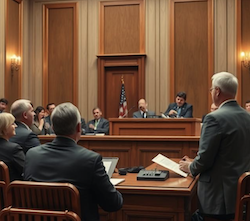 Everyone knows what a jury trial is. There’s a judge, jury, court reporter, and witnesses. It’s a stuffy, formal process created centuries prior to the internet, AI, or Zoom. The jury attends in person, and thus so should your witnesses, or the jury will wonder why they (the jury) must attend live but your witnesses do not. The witnesses include you (the plaintiff or defendant). You’ll meet with your counsel for several hours in advance of trial to prepare you to testify.
A trial may also require expert witnesses: i.e., people you pay thousands of dollars (in advance) to attend trial. The jury selection process can take days, where the plaintiff and defendant must present, or, again, the jury may form early — and negative — opinions.
Then, these twelve strangers (the jury) deliberate to decide the case — having no objective measure of damages in many instances, yet 10 of the 12 of jurors must agree on the exact same verdict number, if any, or it’s a mistrial. 42 Pa. C.S. § 5104(b). You have no control over the jury’s verdict. Then, the verdict might be final, as hoped (for closure) or it might not. Either party can appeal to the superior court — for anything from errors of law to juror misconduct — which carries of a new trial and doing this all over again!
 A Mediation
A mediation, however, works totally differently. There’s no judge. No jury. No court reporter. It’s just the parties and their lawyers coming together in person in a conference room — or virtually via Zoom or other platform — to try to resolve the case with the help of an agreed upon mediator, selected to have subject-matter expertise to educate the parties about how a jury would likely view the evidence.
How much does mediation cost?
In mediation, the plaintiff and defendant pay for the mediator’s time, which is typically split among the parties. A mediator will cost anywhere from $500 to $1,000 per hour in Pennsylvania. This may seem expensive, since the filing fee for a jury trial is only around $200 and the judge’s salary is paid by the county or federal government. But the total cost of a jury trial in Pennsylvania — when all expenses are tallied — can range from $5,000 (on the ultra low side) to $100,000 or more, depending on how many experts testify. A mediation, however, involves only a tiny fraction of the costs of trial.
However, be skeptical of mediators charging a “flat fee,” as this can give the mediator little or no incentive to put in extra hours, which is often necessary to reach a resolution. For example, Washington County PA has a mediation program, charging only a low flat fee of $300 to each litigant, but the mediator is only paid $300 per day, whether he declares the parties “too far apart” 4 PM versus or works another two hours to resolve the case entirely at 6:00 PM the same day.
When is mediation not appropriate?
Mediation makes little or no sense when:
-
A party wants a determination of who is right.
- The parties are too far apart in their discussions for mediation to work effectively: i.e., the plaintiff wants $2M and the defendant offers $500.
 The amount of money at issue is relatively small, compared to the costs of mediation. For example, if the case is worth less than $10,000, mediation can be cost-prohibitive. For this reason, many companies — dealing with individuals — ask the opposing party to sign something requiring the use of arbitration or mediation of any dispute. This can render unaffordable even the most legitimate — but relatively small — claim against the company.
 - A party wants to “send a message” to the other party and/or “clear his name” in a public setting. Mediation is private and confidential. Plus, a mediator cannot — and will not — “punish” any party. In fact, no change to a party’s rights can occur at the mediation absent the express consent of all parties.
How do you prepare for a mediation?
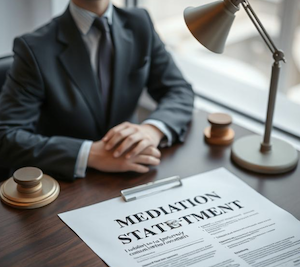 Several days prior to the mediation, your attorney will send the mediator a “confidential mediation statement,” which arms the mediator with key facts and arguments to use in your favor, to help the opposing party understand your position. Your lawyer should confirm with you (the plaintiff or defendant) the accuracy of your mediation statement, before the mediator reads it.
The mediation statement is key because, at the mediation, you do not offer any witness or evidence, aside from pictures or documents included with your mediation statement. You, the litigant, never testify under oath at the mediation, so anything you want the mediator to “think hard” about should be included in your mediation statement.
What happens at a mediation?
Here’s how the day of mediation works:
The First Few Minutes
 The parties and their representatives (and the mediator, of course) come together, either in a conference room or remotely via Zoom or other format. The mediator addresses the group first. He or she will describe the process and let the plaintiff and defendant know they need not speak, but they’re allowed to.
Opening Statements
Then, the mediator will ask the Plaintiff’s representative if she wants to give an “opening statement,” like in a trial. The answer is typically “yes.”
The plaintiff’s opening statement is key, because it can:
-
-
- define the issues for discussion,
- call attention to evidence favoring the plaintiff, but in a respectful way, playing “devil’s advocate,” saying “I’m not here to argue, I’m just saying what a jury will see to try to resolve this matter today.”
- show how those facts will resonate with a jury, and
- address (and explain away) the weaknesses of their own case.
-
If the defense team says anything during their opening, they’ll likely keep it brief, or merely say “there are two sides to every story.” This is because saying too much — at this early stage in the process — can inflame the opposing party and thus frustrate the amicable purpose of the gathering.
Break Out Rooms
Next, the parties get separated into different rooms: one for the plaintiff’s team, another for the defendant’s team. The mediator first meets with the Plaintiff’s team, to confirm how much money is demanded. Then the mediator meets privately with the defense team, to get their response and counteroffer. After that, the mediator spends the rest of the day going back and forth between the separate rooms, gently pressuring each side to move closer together until a settlement is reached.
What strategy works best at a mediation?
The best strategies — for parties trying to resolve their case at the mediation — include:
1. Know what you want from the process versus what you need.
For example, a Plaintiff may want $1,000,000 but would accept $200,000. Or, the Defendant may want to pay nothing, but would pay $100,000 at mediation to avoid the cost of trial.
2. Listen
 At the mediation, listen to the mediator’s take on the case. That’s what you’re paying for. Listen to the opposing party, because they’re under the same financial pressure as you to settle the case. Like you, they’re paying half of the mediator’s fee. And they want their time — and money — spent wisely, as you do. Thus, the process should motivate the parties to put their best arguments and “real numbers” on the table. So if the other side — and/or the mediator — ask you to pump the brakes on your expectations, consider the reasoning first, before you react, because you might have received candid, accurate information, which could have spared you a lengthy and expensive jury trial to resolve the case.
3. Come prepared
The mediator will challenge your position to test its strength. Here’s where your legal team earns their fee, by having counterpoints at the ready, for efficient presentation to the mediator, to reinforce your position.
4. Rely on the mediator’s expertise
Give the mediator time to explore creative solutions, even if it means adjourning the mediation to resume another day, because more time may be needed to get the opposing party to understand and accept your position.
What strategies should be avoided?
The “don’ts” of mediation include:
 Don’t create “a bridge too far” for the mediator
Most importantly, the pre-mediation demand and offer need to be in the same ballpark. Otherwise, the mediation process may have no chance. Plus, the more issues you raise reduce the chance of resolving your case in one day. Thus, prior to arriving at the mediation, your lawyer should feel out the opposing party’s position and evaluate whether minor issues can be worked out prior to mediation.
Never tell the mediator your “final number” until you’re very close to having a deal
Otherwise, the mediator may focus on only on getting you the number you “want,” versus getting you a much better deal, potentially. For example, if you demand $200,000 but would accept $50,000, don’t tell the mediator as much, early on. Instead, let the mediator work to settle the case closer to 200K versus 50K.
Don’t play petty games
Each party should only make good faith demands and counteroffers. For example, if you take all morning to move just a few hundred dollars from your starting position (in a five, six or seven figure case), the other side will likely do the same, accomplishing nothing. Plaintiffs: “sometimes you need to lower the food, to make the dog jump up to a higher amount.”
Avoid drawing a line in the sand too early
Giving the other side an ultimatum can shut down negotiation, especially early on.
 Don’t make baseless threats
Only make promises on which you intend to deliver. If your threats ring hollow, everything else you say — to posture for a good settlement — will sound shaky, as well. For example, use sparingly the threat to “walk away” from negotiations, because it’s a known tactic, which rarely rings true. In fact, in a process meant for constant negotiation, declaring one’s “final number” — early on in the process — will make you sound unreliable.
What are the “pros” of Mediation?
Mediation can be cost-effective and time-saving. Other benefits include:
- Mediation simulates an actual trial in some regards but without the cost of a multi-day fully formal trial. This forces the participants to think long and hard about their actual settlement “number,” versus engaging in endless posturing, because, as the day unfolds, they can feel the time-cost of petty posturing.
- It involves little risk. Mediation is non-binding (unless the parties reach a settlement) and subject to a privilege, so nothing said at the mediation is admissible later on.
- It gets the parties thinking about settlement, even if no settlement occurs at the first mediation. Settlement can happen later.
How does a case go to mediation?
- Consent of the parties. Parties are free to mediate their case at any time, voluntarily. In fact, the courts strongly encourage it.
- Court ordered mediation. In federal court, the Western PA rules require the parties to engage in alternative dispute resolution (ARD), which includes mediation. And, judges are quick to sanction parties who fail to act in good faith to take the process seriously. Click here for more. But in PA state court, mediation is not automatically required for all cases; courts can order it, and some specific local rules, like Allegheny County’s, may mandate it for cases on the trial list, but generally, participation is voluntary unless mandated by a court order or local rule.
- A contractual clause. Many contracts require the parties to mediate their disputes before filing suit in court. These are often enforceable, even if the contract had been allegedly procured through fraud, because the courts want the parties to at least talk about a resolution of their dispute, before filing suit. However, the party against whom the mediation/arbitration clause is asserted must have actually seen the clause while negotiating the agreement.
- Specific agencies: State agencies like the Pennsylvania Human Relations Commission (PHRC) offer voluntary mediation services for certain types of disputes, such as employment or housing discrimination claims, as an alternative to a formal investigation.
How is mediation different from arbitration?
Unlike mediation, arbitration can be binding or non-binding. Binding mediation carries many of the formalities of a jury trial, requiring witness testimony and admissible physical evidence and documents. But it’s slightly less formal than a jury trial, yet it can end a dispute even when the parties disagree.
Non-binding arbitration can be the worst of both worlds. It requires the production of evidence (like a jury trial), but it’s non-binding. That said, an arbitration can easily morph into a mediation, possibly creating the best of both worlds: if done, right, you can get a “ruling” by the arbitrator (on key issues of fact and law), coupled with the benefits of a mediation, described above.
Does mediation deprive you of having a judge or jury hear your case?
Yes, but only if you reach a binding agreement at the mediation to settle your case. Otherwise, absent settlement, the parties may proceed to court — as always — as though the mediation had never occurred.
Is an agreement reached during mediation enforceable?
Generally speaking, yes.
But the agreement must contain the elements of a valid contract in Pennsylvania to be enforceable. If, however, the parties merely agree — at the mediation — to draw up a settlement agreement to be reviewed later by all parties before signing, then arguably, the “agreement” at the mediation could be construed as an “agreement to agree,” which is not a valid contract in PA. Courts have held: “agreement to agree, where [material] terms are left to future negotiations, is unenforceable.” See In re Estate of Wyman, 8 N.Y.S.3d 493, 494 (App. Div. 2015), ATACS Corp. v. Trans World Communications, Inc., 155 F.3d 659 (3d Cir. 1998).
But if the parties draw up an agreement during the mediation that contains the material terms as final, with the understanding that a few minor details will be addressed in the final written agreement, then it’s more likely to be enforceable and treated as “done.”
Click here to learn about the common mistakes made when settling a case.
Let’s Get Started!
If you’re contemplating — or required to participate in — mediation, contact our lawyers today about us representing you throughout this process in Western PA.
412.342.0992