
PA’s statute of repose creates a hard deadline to sue; it’s like an avalanche that destroys just about everything in its path. The Pennsylvania Supreme Court’s decision in Clearfield Cnty. v. Transystems Corp., No. 10 WAP 2025, ___ A.3d ___ (Pa. Apr. 30, 2026) created yet another powerful example, this time extinguishing a government’s right to sue when commenced too late.
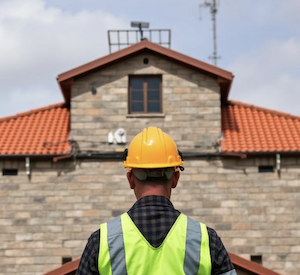 The case started with a common-sense complaint. Clearfield county discovered a serious construction defect in its jail—decades after it was built—and had to spend millions to fix it. The roof, it turns out, was not connected to its masonry walls and was instead “floating on top of the building,” costing $3,878,660.00 to fix.
Naturally, the county wanted to recover that money from the companies involved in the original construction, even though the claim was time barred by the 12 year statute of repose. So the County turned to an old legal principle with a long history: nullum tempus occurrit regi (often shortened to “nullum tempus”).
The Meaning of “Nullum tempus”
Nullum tempus is a Latin legal maxim meaning “no time runs against the king,” holding that statutes of limitations do not apply to the government or sovereign. It protects public interests, allowing government entities to sue even after standard time limits for private lawsuits have passed.
In Pennsylvnia, Nullum tempus is a common law doctrine that “permits a government agency ‘to circumvent the applicable statute of limitations.’” Allegheny Intermediate Unit v. E. Allegheny Sch. Dist., 203 A.3d 371, 378 [J-80-2025] – 23(Pa. Cmwlth. 2019) (quoting Duquesne Light Co. v. Woodland Hills Sch. Dist., 700 A.2d 1038, 1051 (Pa. Cmwlth. 1997)).
Different From Sovereign Immunity
The doctrine of nullum tempus is distinct from sovereign immunity because when the Commonwealth invokes nullum tempus, “it is seeking as a plaintiff to vindicate public rights and protect public property,” whereas in asserting the defense of sovereign immunity, the Commonwealth as a defendant is seeking to preclude an injured party’s recovery for the state’s alleged wrongs. Id. at 104.
In Pennsylvania, nullum tempus originally provided immunity from statutes of limitations to the sovereign alone, i.e., the Commonwealth and its agencies, and its protection did not extend to political subdivisions, such as counties or municipalities. Evans v. Erie Cnty., 66 Pa. 222, 228 (Pa. 1870). However, in Holmes, PA courts recognized that the protection of nullum tempus from statutes of limitations can extend to political subdivisions.
Can Nullum Tempus Save a Claim Barred by the Statute of Repose?
The Supreme Court said no—and said it clearly.
The reason comes down to the difference between two types of legal deadlines. Most people are familiar with statutes of limitations, which set a time limit to file a lawsuit after something goes wrong. Those can sometimes be flexible—courts may pause them or make exceptions in certain situations.
A statute of repose, however, is something else entirely.
“[A] statute of repose … completely abolishes and eliminates the cause of action.” Noll, 643 A.2d at 84 (citations omitted); accord Vargo v. Koppers Co., Inc., Eng’g & Constr. Div., 715 A.2d 423, 426 n.3 (Pa. 1998).
That’s exactly how the Court treated Pennsylvania’s 12-year construction statute of repose at 42 Pa.C.S. § 5536. The jail was completed in 1981. By the early 1990s, the legal window to bring any claims about its construction had permanently closed. So when the county filed suit in 2023, the Court viewed it as trying to bring a claim that no longer legally existed.
What makes the decision especially striking is that even the government couldn’t get around this rule. The Court acknowledged the long tradition of nullum tempus, but ultimately said it doesn’t matter here. That doctrine is based on fairness and public policy—but the statute of repose reflects a different, equally important policy choice made by the legislature: giving builders and designers certainty that, after a fixed number of years, they are free from liability.
If courts allowed exceptions—even for the government—it would defeat that purpose. Contractors would never truly be “off the hook,” and the deadline wouldn’t mean much at all.
So the statute of repose, in effect, steamrolls over everything in its path: late discovery, fairness arguments, and even old doctrines designed to protect the public. It’s not just a deadline—it’s a final cutoff.
The takeaway is simple but important. Some legal time limits are flexible. This one is not. Once the clock runs out on a statute of repose, there’s no reopening the case—because, legally speaking, there’s nothing left to reopen.
Contact Us Today!
Feel free to contact us today to schedule a consultation.