 Forum non conveniens is latin for “inconvenient forum.” It is a legal doctrine in Pennsylvania that applies in civil cases for money, mainly. It allows a court to dismiss a case, if another jurisdiction is significantly more appropriate for the civil trial, based on the location of witnesses, evidence, and other factors.
Forum non conveniens is a common law, discretionary doctrine allowing a court to dismiss or transfer a case even if venue is proper, when there’s a significantly more appropriate forum elsewhere (often another county or another state/country). For example, in a suit against a negligent driver for roadway injuries in Allegheny County, PA, venue is proper in Allegheny County, per PA Rule 1006, even if neither party lives there.
But forum non conveniens is a different matter.
Inconvenience Alone Is Not Enough
 The Forum non conveniens doctrine aims to balance the interests of all parties, the public, and the judicial system to ensure fairness and efficiency in terms of the location of the trial. That said, it’s not enough, for example, for a party who lives in New York City to claim it’s “inconvenient” for a civil trial to proceed against him in Hawaii.
In fact, the Pennsylvania Supreme Court has made it clear that inconvenience by itself is not sufficient for a court to move the lawsuit. As established in Cheeseman v. Lethal Exterminator, Inc., 701 A.2d 156 (Pa. 1997), a defendant must demonstrate that the chosen forum is “oppressive or vexatious,” not just inconvenient. This high standard protects the plaintiff’s choice of forum and prevents venue motions from being used to obstruct legitimate litigation.
Defining “Oppressive or Vexatious”
Pennsylvania courts interpret “oppressive or vexatious” to mean:
- The litigation imposes a great hardship on the defendant that is disproportionate to the plaintiff’s right to choose the forum.
- The forum creates a situation that would effectively deprive the defendant of a fair trial.
Cases like Bratic v. Rubendall, 99 A.3d 1 (Pa. 2014) clarify that oppressiveness must be real and supported by record evidence, not speculative. Wright v. Consol. Rail Corp., 215 A.3d 982 (Pa. 2019), reaffirmed the broad discretion of trial courts while upholding the *Cheeseman* standard.
Burden of Proof
The moving party bears the heavy burden of proving that the forum is oppressive or vexatious. General assertions about travel difficulties, expenses, or witness inconvenience are typically insufficient without specific factual support.
Example Where Transfer Granted
In the case of Woodward v. General Motors, LLC, No. 2:25-CV-00605-JDW (E.D. Pa. June 6, 2025 Wolson, J.), the Eastern Federal District Court in Philadelphia granted a forum non conveniens Motion to Transfer the case to the Middle District Court. There, the Plaintiff’s decedent’s fatal motor vehicle accident involved occurred in rural Tioga County, which is located in the Middle District Court’s jurisdiction. The court noted that, while the Plaintiff would prefer to litigate the case in the Eastern District, all other relevant factors favored the transfer of the case to the district where the accident happened.
 Likewise, in Duxbury v. Reconstructive Orthopedic Assoc., June Term, 2023 No. 1031 (C.P. Phila. Co. Feb. 10, 2025 Bright, J.), the trial court granted a forum non conveniens motion and transferred a medical malpractice case from Pennsylvania to New Jersey. Granted, certain Defendants had their principal place of business and corporate headquarters in Philadelphia. In fact, one of the Defendant physicians was licensed to practice in Pennsylvania and had certain other connections to the state of Pennsylvania. However, the judge found that other factors weighed more heavily in the decision to dismiss the matter and ordered that the case be refiled in New Jersey.
Example Where Transfer Denied
In Charles v. QVC, Inc., No. 24-6703 (E.D. Pa. June 10, 2025 Savage, J.), the court denied a Motion to Dismiss based on the doctrine of forum non conveniens in a case involving a jurisdictional and/or venue issues in a case involving a Plaintiff who was a resident of a foreign country and who was injured in her home country of Trinidad.
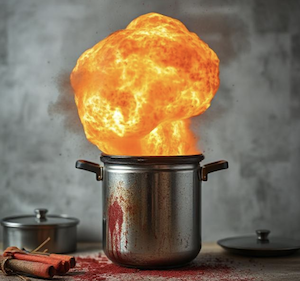 There, Plaintiff had bought a pressure cooker that exploded and injured the Plaintiff. First, the court noted that one of the Defendants had a principal place of business in Pennsylvania. Secondly, the court also noted that, although the Plaintiff’s foreign country was an adequate forum for the litigation of his personal injury matter, a foreign Plaintiff can support her choice of forum by making a strong showing of convenience. Third, the court also emphasized, on the issue of convenience, that the depositions of any relevant witnesses could be conducted remotely.
Ultimately, the court ruled that litigating this case in the Eastern District of Pennsylvania would not result in oppression and vexation to the defendants out of all proportion to the Plaintiff’s convenience. As such, the court denied the Defendant’s motion to dismiss this action on forum non conveniens grounds.
Conclusion
In Pennsylvania, a party cannot successfully invoke forum non conveniens based solely on inconvenience. For a court to grant a motion to dismiss (interstate) or transfer (intrastate), the movant must do two things. First, he must present clear, fact-based evidence in support of the motion. Secondly, he must demonstrate that the forum is oppressive or vexatious.
Recommendation
When considering a forum non conveniens motion in Pennsylvania, we recommend the following:
- First, gather detailed evidence of hardship or unfairness beyond mere inconvenience (e.g., inability to compel key witnesses, extreme costs, or health-related travel limitations).
- Secondly, frame the argument in terms of the harsh consequences and unfair burden, not just convenience.
- Third, file the motion early in the court process to avoid waiver.
Let’s Get Started!
Contact us today for a review of your civil matter.
412.342.0992