Legal Representation For Contractor & Builder Disputes
 It can be exciting to construct or renovate a home or business, but unfortunately, these undertakings are complicated. Lawsuits frequently arise in disputes between a property owner and a contractor or builder for commercial or home improvement work.
Holding a Contractor Responsible
A contractor (or builder of a new home) must follow the contract, of course. If not, they can be liable to pay for another contractor to complete and/or fix the job, plus any resulting damage to the property. Rarely are these cases “cut and dried,” however. And it’s often difficult to collect money against a corner-cutting contractor.
Consumer protection statutes offer safeguards but also have limitations. Additionally, it’s essential to evaluate the potential for a lien against the property in any project due to non-payment for completed work.
Representation in Western PA
We represent both property owners and contractors when disputes occur. The press recognizes our experienced attorneys as experts in Western PA civil litigation. Further, Duquesne Law School asks us to speak to students each year about bringing cases to civil court.
Get Peace of Mind Today!
A Pittsburgh lawyer at our firm will speak with you about how to sue a contractor (or how to defend a claim) relating to home improvement or a commercial construction job. We cap fees at only $200 to speak for a detailed consultation for up to an hour and review documents, to fully advise you about the nature, cost, and practicality of any claim on defense in Western PA.
Call or Email Any Time
412.342.0992
Our Location
Need more info? Read the Article Below
Below, we discuss both home improvement and commercial jobs.
Let’s get right to it!
I. HOME IMPROVEMENT & COMMERCIAL WORK
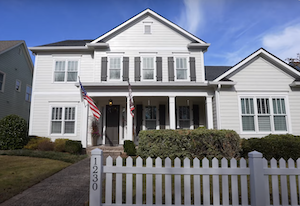
A property owner’s claim against a contractor or builder may seem like a “slam dunk.” And many are.
However, contractors often draft the agreement heavily in their favor, adding special clauses that protect themselves, primarily. With this, expect to see clauses that –
-
- force the owner to pay the contractor’s attorney fees (but not the reverse) for a dispute where they prevail;
- force you to give up your right to a jury trial, making you litigate only (and expensively) in AAA arbitration, outside of the courts; and
- limit the damages you may claim; or
- Limit the time period to bring suit from four years to a shorter time frame.
Also, non-payment of a debt to contractor can result in a mechanic’s lien on the property, even if consumer protection exists, as discussed below. Click here for more.
Thus, have your legal representative review anything in writing in regard to improvement of property.
Poor Work is Not Necessarily a “Crime” Worth “Punitive Damages”
The property owner may harbor strong negative feelings toward a contractor if, for example, the job started weeks (or several month) late. Or, perhaps the contractor was rude, demanded more money, and/or caused property damage. However, none of these things are a basis to recover “punitive damages” (or an award for your attorney fees), necessarily. But there exist two exceptions:
-
- The contractor engages in fraudulent inducement, intentionally misrepresenting a key fact during the formation of the contract, like saying he would use cedar wood flooring — a “deal breaker” otherwise for the property owner — but intending all along to use a cheap synthetic flooring;
- Consumer protection law governs the claim, giving the property owner special rights.
In sum, a contractor may mislead the home or other property owner during the performance of the job — show up late, do shoddy work, etc., — with no special penalty imposed, unless consumer protection law applies.
II. PA’s GENERAL CONSUMER PROTECTION LAW
Pennsylvania’s version of consumer protection law, generally, is the Unfair Trade Practices and Consumer Protection Law or “UTPCPL.” However, it only applies to jobs on property used primarily for the owner’s residence. Thus, it only applies to non-commercial jobs.
But when the UTPCPL does apply, it’s a game changer, potentially. It can entitle the home owner to an award for his attorney fees plus treble (or triple) damages for the home owner’s reliance on the contractor or builder’s false statement. Such a claim may exist for statements made before and during the performance of work, but this only applies to both home improvement and new build construction.
III. HOME IMPROVEMENT AND CONSUMER PROTECTION LAW (HICPA)
With regard to home improvement, in 2009, Pennsylvania passed the Home Improvement Consumer Protection Act (“HICPA”), 73 P.S. § 517.1, et seq. With this, the courts effectively micro-managing the improvement of property, adding protections over and above the UTPCPL.
 Importantly, again, HICPA only applies to home improvement, not commercial jobs, and not new home construction. Thus, HICPA makes a distinction between the building of a new home versus home improvement to an existing structure, not “new builds” or new construction.
Examples of true home improvement governed by HICPA include adding or renovating a bathroom, porch, plumbing, deck, kitchen, garage, new baby room, or mother-in-law suite. HICPA also applies to flooring installation, roof installation or repair, electrical work, or demolition.
What Are HICPA’s Requirements For the Contract to Be Enforceable?
When HICPA applies, it all home improvement contracts entered into after July 1, 2009:
- Be written and not merely oral.
- Include the start date, end date, contract price, plus a description of the work,
- Also include the name of the contractor, his (or her) registration ID and numerous other items of information,
- Include a notice of rescission that expressly allows the owner three business days to back out of the agreement.
- Be given to the homeowner, meaning, the homeowner must receive a copy of the contract and notice of rescission before commencing the work;
-
 Any modification to a home improvement contract must be documented in writing and explicitly agreed upon by the homeowner. This requirement addresses situations where a contractor might falsely claim that a new discovery or unforeseen event necessitates additional payment from the consumer. While a change order can be legitimate — if based on a good-faith assertion of altered circumstances — this is not always the case.
Example: Certain contractors intentionally underbid contracts, with the intent to charge more later via a contrived “change order.” Regardless of the reason, any modification to an agreement governed by HICPA must be in writing to be enforceable.
What if the Contractor Violates HICPA?
 A contractor’s violation of HICPA prevents him from enforcing the contract to receive the contract price. Instead, the law limits his ability to recover only the actual value of work he performed correctly (not the contract price).
In fact the Supreme Court of Pennsylvania has determined that the contractor may seek a recovery for only the value of services rendered, which is also called “quantum meruit,” even if the contractor is in violation of HICPA. See Shafer Elec. & Const. v. Mantia, 96 A.3d 989 (Pa. 2014). This is based on fairness and the concept of “unjust enrichment.”
Limits to Contractors Recovering Money In Favor of the Property Owner
If the contractor violated HICPA — and therefore cannot expect to get paid the entire price of the contract — the law spares the homeowner from paying the contractor’s premium-cost, over-charges, or arbitrary “administrative fees” or “cost plus” charges.
Moreover, when he attempts to sue the property owner for only the “value” services rendered, the homeowner my challenge the quality or scope of work performed. This can make it even more difficult for the contractor to recover money for the job.
However, even if the contractor failed to comply with HICPA, he can still take a lien against the property. That said, the lien would equal the value of services rendered, not for the contract price.
What is HICPA’s Effect on Mechanic’s Liens?
There could be a mechanic’s lien against the home by the contractor or any subcontractor or supplier not paid by the contractor. A mechanic’s lien is where the contractor — or sub-contractor or supplier of materials on a job — can take a “lien” against the property, if not paid for his or her work or materials. See 49 P.S. § 1101, et seq.
A mechanics’ lien can result from a contract that is express or implied. See 49 P.S. § 1201 (defining “contractor” as one who, “by contract with the owner, express or implied, erects, constructs, alters or repairs an improvement . . . or furnishes labor, skill or superintendence . . . or supplies or hauls materials, fixtures, machinery or equipment reasonably necessary for and actually used . . .”) (emphasis added).
Note, however, that the home owner’s payment in full of contract price (to the general contractor) will bar liens by the sub-contractors, if they’re not paid. Click here for more. Plus, the party asserting the lien must follow technical requirements, such as getting the claim properly served via sheriff. Contact a lawyer for more details.
What Other Conduct is Forbidden Under HICPA?
 A home improvement contractor may not include certain provisions in the home improvement agreement. These include:
- accepting payment greater than 1/3 upfront of the contract price, exclusive of costs.
- failing to carry liability insurance of at least $50,000 for the job. Note, however, this covers resulting damage and not the failure to complete or perform the job, as discussed below.
What Clauses Are Voidable?
Though not void on its face, certain clauses are voidable by the home owner, such as:
-
- A hold harmless clause.
- A waiver of any right to a jury trial in any action brought by or against the owner. However, a mediation clause that requires non-binding mediation or arbitration (allowing the parties to proceed to jury trial if not settled in mediation) is OK.
- A provision by which the owner agrees not to assert any claim or defense arising out of the contract.
- A provision that the contractor shall be awarded attorney fees and costs. This is crucial for home owners. Otherwise, for a homeowner, the risk of having pay both his attorney fees and the contractor’s fees defending the action can be too great.
- A clause by which the owner relieves the contractor from liability for its illegal debt collection actions.
- A waiver of following building or safety codes, and
- A confession of judgment clause.
Arbitration Clauses
A court may deem an arbitration clause void unless:
-
- The text of the clause is in capital letters.
- The text is printed in 12-point boldface type and the arbitration clause must appear on a separate page from the rest of the contract.
- The clause shall contain a separate line for each of the parties to indicate their assent to be bound thereby.
- The clause shall not be effective unless both parties have assented as evidenced by signature and date, which shall be the date on which the contract was executed.
- The clause shall state clearly whether the decision of the arbitration is binding on the parties or may be appealed to the court of common pleas.
- The clause shall state whether the facts of the dispute, related documents and the decision are confidential.
In reality, it is extremely rare for an arbitration clause to meet the above standard set forth in HICPA.
What Are the Penalties Under HICPA For Noncompliance?
A contractor who fails to comply with key provisions of the Act may suffer the following:
- Liability for damages. This applies if the homeowner sustained damage from the contractor’s work, such as having to pay another contractor to finish the work or repair damages from the original contractor’s negligence. Examples include a tipped over paint can. Or, damages to landscaping or other things that could have been prevented with due care.
- Damages times three (or treble damages). HICPA provides that a violation of HICPA is also, by definition, also a violation of Pennsylvania’s Unfair Trade Practices and Consumer Protection Law (“the UTPCPL”). Thus, the home owner can also get an award for triple or “treble” damages, plus attorney fees.
- Criminal penalties and imprisonment, if the contractor engages in misrepresentation or accepts more than one third of the contract price upfront (exclusive of material costs).
- The Act is a consumer protection law. The Commonwealth of Pennsylvania maintains a database for every violation of the act of non-compliance that results in a civil judgment. Plus, the contractor can lose his license for failure to comply with the Act.
What Types of Work Are Excluded From HICPA?
All home contracts for home improvement between homeowners and contractors are covered under the Act, unless expressly excluded, such as:
- New Construction of a home, as noted;
- Emergency work; this can be a key exception as many contractors doing home improvement will try to characterize it all as an “emergency,” such as home improvement following a storm, even if the work need not be done imminently;
- Contracts for less than $500;
- Work on a multi-unit building having more than two units, and
- Certain types of plumbing.
Before we finish discussing home improvement, please note:
-
- a contract may never charge “sales tax” on home improvement services, and
- for contracts entered into with a “door-to-door” salesman for the contractor, there exists a three (3) day cancellation period. Click here for more.
Lastly, here are some more answers to common questions about home improvement.
IV. BUILDING A NEW HOME
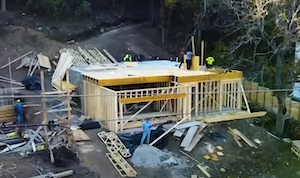 As mentioned, HICPA does not apply to the building of a new home. Thus, the home building contract may include an arbitration clause, requiring all disputes to go to arbitration, which is fairly expensive compared to court. Nor is there a requirement for the builder to have liability insurance or a limit on how much money can be put down.
Plus, for a new build, the strict requirement of a writing under HICPA does not apply to new construction. That said, Pennsylvania has the statute of frauds, which requires that all contracts for the sale of goods over $500 or the sale of land must be in writing. A home new-build contract can touch upon either of these. Materials purchased relative to building the home are “goods,” for example. Moreover, basic contract law principles apply, regarding enforcement and defenses to the contract.
Further, for new construction, if the home is purchased for use as a consumer (not as a rental), then Pennsylvania’s Unfair Trade Practices and Consumer Protection Law would apply. This allows the homeowner to seek an award for actual damages time three, plus attorney fees, as mentioned. Click here for an award of $318K for attorney fees against a builder, Heartland Homes.
V. COMMERCIAL PROJECTS FOR BUSINESSES
Contracts to build or renovate a property for commercial use — including leasing it to tenants, is outside of consumer protection law. These contracts are permitted to include an arbitration clause in the agreement, requiring the matter to go to AAA arbitration or another format. You may or may not want to enforce this, however, as arbitration has relatively high filing fees. Either way, our Pittsburgh lawyers are experienced at handling all kinds of arbitration and mediation. When the property is intended for a commercial purpose, either as a rental, or to be used as a business, neither HICPA nor Pennsylvania’s Unfair Trade Practices and Consumer Protection Law would apply.
VI. OTHER ISSUES
On many jobs – either new-build, improvement, consumer, or commercial — the sub-contractor has rights against the general contractor, if the subcontractor is not paid. A mechanic’s lien is the usual option, but lien waivers can diminish those plus a mechanic’s lien is an “inchoate lien” which means, it stays with the property, only, and the party having a lien may not force the of the property. An unpaid contractor or subcontractor can instead pursue a claim under Pennsylvania’s Contractor and Subcontractor Payment Act, found here. Click here for our analysis. This allows for steep interest to be paid on the unpaid amount, plus, the unpaid party can seek an award the payment of his or her attorney fees, if that person is the prevailing party.
New Number: 412.326.0468
Need more info?
Call or Email Any Time
Frequently Asked Questions
When may a property owner fire a contractor and pay another the finish the job?
The property owner has a duty to mitigate damages and give the contractor a reasonable opportunity to finish the job. A property owner need not give the contractor forever, however. The property owner should establish evidence in writing concerning attempts to get the contractor to finish the job. Use email, or fax, or text even, anything. Avoid relying on oral conversations alone, either over the phone or in person.
How much money can the property owner seek against the contractor?
Regarding every kind of contract in PA, each party is entitled to the benefit of his or her bargain. The law seeks to put each party in the place they would have been, had the contract been carried out. So the actual damages concerning any contract (regardless of consumer protection issues described above), is the cost it would take to “make you whole.” That said, from the property owner’s side, this means, how much would it cost to have someone else finish the job exactly as promised? On the contractor’s side, it means, to be paid what the property owner agreed to pay you. Also, a recovery can be made for any reasonable change orders necessitated by unforeseen circumstances.
Consumer protection issues and damages (such as treble damages and attorney fees) are separate matters, discussed below, regarding non-commercial contracts.
How do I get estimates to repair and prove damages?
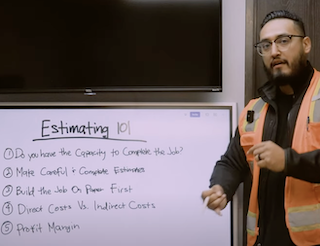 On the property owner side, you will typically need an estimate from another contractor (or better yet, an engineer) to prove: (a) that defective quality of work (b) caused the damages at issue, and the (c) the dollar value to correct/complete the work or fix damages caused. Click here to learn more about obtaining expert evidence.
But be careful with sharing with the opposing party your estimates of damages. You’re not required to share every estimate. Plus, once your estimate is offered as evidence, the contractor will assume that as your “high number.” If you later submit a higher estimate, the defendant will likely disregard the higher evidence and you will lose credibility. So only submit to the defendant and/or court a repair estimate that’s on the higher side, but also fair, reasonable, and reliable. After all, the person providing the estimate may serve as your expert witness at trial and/or be the person to perform the corrective work.
Should you get an estimate from another contractor to finish the job?
Yes, but as the Grail Knight told Indiana Jones: “choose wisely.” Select someone you would want and trust to do the job, or you may find yourself in a dispute with two contractors instead of one.
Does insurance cover your claim against the contractor?
The short answer is, it depends.
Property owner side
The property owner’s homeowner’s insurance may cover damage caused by the contractor, such as cracked concrete or other harm to the property secondary to the contractor’s work.
The contractor may also have liability insurance. In fact, home improvement contractors in PA are required to carry at least $50,000 of liability insurance coverage. However, an insurance company only provides liability coverage for damages, not the failure to finish the job. Otherwise, no contractor would ever finish! Instead, they would have their insurance carriers pay you to have someone else to finish the job. For more on the limits of liability insurance, click here.
Rather, the contractor’s liability insurance will only cover the “resulting damage” he caused. This includes a contractor tipping over a paint can, as mentioned, or causing some other damage to your property beyond failing to finish the job. This is considered “secondary damage,” which insurance will typically cover.
Contractor side
For any contractor sued, he should immediately consider all sources of liability coverage for himself or his company. Ideally, the contractor should liability insurance specifically for the job at issue, as his own homeowner’s insurance will not likely cover mistakes made in his professional capacity.
Can I get an award for my attorney fees?
It depends. The general rule in Pennsylvania is, each party pays his or her own attorney fees to litigate a dispute. An exception exists where the parties agree otherwise. Thus, you should talk to construction law attorneys to answer this. However, as mentioned, attorney fees may be recoverable in some instances. One example is HICPA (above) or another consumer protection statute, such as Pennsylvania’s Unfair Trade Practices and Consumer Protection Law (UTPCPL), attorney fees may be recoverable.
Will the case get settled?
 This depends. Some contractors are shady and never pay because they have multiple unsatisfied judgments against them. Others, however, are more responsible. Either way, having a lawyer involved will likely enhance our chances to collect money. You may need to sue a contractor, or defend suit, if you are the contractor.
If you are a homeowner with a claim governed by HICPA (above), you or your lawyer may inclined to contact the PA attorney general (AG) for help for consumer-related cases that are not commercial in nature. However, the AG will not represent you in court, most likely. In reality, only in very rare instances will the AG represent you in any capacity, except, perhaps, writing to the contractor for his side of the story. This, at least, puts pressure on the contractor and enhances the chances of settlement. Thus, you should plan to hire a private lawyer like us to proceed with any claim against a contractor.
Does a judgment in court mean the money will be collected?
Unfortunately, no.
This often causes frustration on the part of property owners. Just because you win in court, that does not mean you’ll collect the amount of your judgment. As the expression goes, there can be a long walk from the courthouse to the bank.
On the property owner side, if you get judgment, you can use it to collect against the contractor’s hard assets and stuff, plus any bank accounts. Only, many contractors already have judgments against them. For example, many are penniless (on paper at least) and carry few assets. They only lease their tools and equipment from Lowes or Home Depot, doing business “cash only.” Also, if the contract is for home improvement, however, there is one ray of light. An unsatisfied judgment against a home improvement contractor can work to suspend his home improvement contractor license. This, however, assumes the home improvement contractor is not a total fraud and cares about his license.
Contractor’s Defense to Enforcement of a Judgment
On the contractor’s side, you can get a mechanic’s lien, which stays with the property. However, absent a money judgment, you may not force the sale of the property. Thus, it’s useless until the property gets sold. Fortunately, in Allegheny County, a judgement against anyone automatically constitutes a lien against property. With a money judgment, the lien gains “teeth”. It can be used to force the sale of the property. That said, the mortgage holder will be paid first, so unless there is significant equity in the home. Thus, this approach may not be cost-effective.
What if someone was injured from the construction or renovation?
The careless work of a contractor may causes injury to persons on the property. For example, a water leak can cause a mold related illness or damages. In addition, our lawyers handle all kinds of injury claims. Injuries are governed by negligence law, but your home improvement or other contract may limit those claims. Also, a lawyer should review any waiver closely as these have been disregarded by the courts in numerous instances.
Can I post something online about the shady or shoddy contractor?
 The answer is yes, but you have to be sure you are factually correct. Even when you are correct, you can get sued for defamation or trade disparagement if the contractor sees it differently. You can be sued for defamation (of the contractor personally) or trade disparagement, by his company, corporation, or LLC. If you feel you must speak negatively about a contractor, at least do not make any reckless statement.
How long will my lawsuit against a contractor take?
How long a case takes depends on the amount of money you’re seeking. The more money sought, the longer it will take. Click here for more. Plus, after you file suit, it might feel like the case is “frozen” or that “nothing’s happening”. This is common. It might be your lawyer’s fault. Or it might not. Click here for more.
News and Legal Updates
- An individual claimed he should not be liable for the conduct of his company, allegedly in violation of HICPA. Judgement in favor of the plaintiff was affirmed, however. Parker v. Surman, Pa: Superior Court 2019.
- Helpful Home Improvement Information, click here.
- $2.3M verdict against home builder for fraud and failure to honor warranty for water infiltration. Click here for more.
Contact us For a Consultation
You should talk to our Pittsburgh construction law attorneys to understand your rights. Every case is unique. Please do not rely on the above, primarily. Instead, talk to a lawyer for advice about how the law applies to your case. Plus, we offer reasonable fees in litigation. We have extensive experience litigating construction law disputes. Click here for more. Get help today with your claim on a contractor or your defense!
New Number: 412.342.0992
Need more info?
Call or Email Any Time.