“Why Is My Lawsuit Taking So Long?”
Understanding Why a Pennsylvania Civil Case Can Feel Frozen
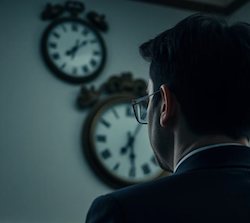 If you’ve filed a lawsuit in Pennsylvania, you probably expected things to keep moving. At first, they did. Papers were filed. Letters were exchanged. Maybe depositions or document requests went out.
Then… nothing.
Weeks pass. Months pass. You check the docket and it looks quiet. Your lawyer seems diligent and responsive, but the case itself feels frozen. You may be thinking:
- Why is my lawsuit taking so long?
- Did something go wrong?
- Is my legal representative dropping the ball?
- Why does it feel like the case just stopped?
You’re not alone—and in many cases, this slowdown is normal and not your lawyer’s fault.
Below are the most common reasons a Pennsylvania civil case appears to stall after it’s been filed.
1. Judges Change, Retire, or Get Reassigned
One surprisingly common reason a case pauses has nothing to do with either lawyer.
Judges retire. Some move to different court divisions. Others get reassigned heavy criminal calendars or special projects. When this happens, your case may sit temporarily while the court finds another judge who can take it over.
This kind of delay often does not appear dramatic on the docket, but it can slow everything down behind the scenes.
2. In Pennsylvania, the Court Doesn’t Always Push the Case — Your Lawyer Must
Unlike TV courtrooms, judges don’t always schedule trials automatically.
In many Pennsylvania counties:
- The court waits for lawyers to request a trial date
- Certain deadlines must be met before the case can move forward
- Discovery (exchange of information) often must be completed first
So if you’re thinking, “Why hasn’t the judge set a trial yet?” — the answer may simply be that the rules require your lawyer to ask at the right time.
3. The Other Side Isn’t Cooperating With Discovery
This is one of the most common reasons a civil case appears to stall.
What is discovery?
Discovery is the phase where both sides must exchange information—documents, records, answers to written questions, and often deposition testimony.
The problem
Sometimes, one side:
- Ignores document requests
- Produces incomplete records
- Misses deadlines
- Flat-out refuses to comply
When that happens, your legal representative cannot just move forward as if nothing happened. Instead, your representative may have to:
- Send reminder letters
- File a Motion to Compel
- Ask the court to impose sanctions
All of this takes time—and often happens quietly while the docket looks inactive.
A Real Pennsylvania Example: When Discovery Stops a Case
Enter the parties in Barbarevech v. Tomlinson, No. 18-CV-4821 (C.P. Lackawanna Co. Oct. 29, 2021). This case arose from a motor vehicle accident. During discovery, the defendant repeatedly failed to produce liability insurance documents, even after the court ordered them to do so.
The plaintiffs eventually filed a Motion for Sanctions.
Judge Terrence R. Nealon reviewed Pennsylvania law under Pa. R.C.P. 4019, which governs discovery sanctions, and explained that while judges have broad discretion, any punishment must “fit the crime.”
The court considered five required factors:
- How serious the discovery violation was
- Whether the non-complying party acted willfully or in bad faith
- The prejudice caused to the other party
- Whether that prejudice could be cured
- How many discovery violations occurred
After reviewing those factors, the judge found the defendant had:
- Willfully ignored discovery obligations
- Disobeyed court orders
- Wasted judicial resources
The court awarded attorney’s fees and expenses against the defendant and criticized the lack of civility involved.
To the client, this case may have looked stalled. In reality, the lawyer was fighting behind the scenes to compel compliance.
Even Federal Courts Deal With This Problem
In McCready v. Re/Max Achievers, No. 2:24-CV-02226-JFM (E.D. Pa. Dec. 8, 2025), the defense counsel produced 600 pages of critical documents just days before trial.
The court declined to enter a default judgment but imposed serious sanctions:
- Attorney’s fees and costs
- Limits on defenses at trial
- Restrictions on how the late documents could be used
Again, discovery misconduct slowed the case—but the delay was not the plaintiff’s lawyer’s fault.
4. The Case May Be Stayed (Temporarily Paused)
Another major reason a case stops is a court-ordered stay.
What is a stay?
A stay temporarily halts a case. This means no discovery. No trial. No movement—until a specific issue is resolved.
Common reasons for a stay include:
- A related criminal case
- A pending appeal that could change the law
- Overlapping litigation in another court
- Case management concerns
Example: Civil Case Stayed Due to Criminal Charges
Enter the parties in Estate of Dugan v. Hotton, No. 2023-CV-4957 (C.P. Lackawanna Co. Jan. 6, 2026).
This was a wrongful death case arising from a motor vehicle accident. There, the court granted a stay of the civil trial while DUI criminal charges against the defendant were pending.
Judge Nealon applied a six-factor balancing test from Kessee v. Dougherty, as follows:
-
- Issue Overlap: How much do the civil and criminal case issues overlap?
- Criminal Status: What’s the status of the criminal case (e.g., indicted, investigated)?
- Plaintiff’s Interest vs. Prejudice: Does the plaintiff need a quick case, and how much harm does delay cause them?
- Burden on Defendants: How much hardship would staying the civil case cause the defendants?
- Court’s Interest: What are the court’s interests in managing its docket and ensuring efficient justice?
- Public Interest: What are the broader public interests in proceeding or delaying?
Judge Nealon concluded the stay was appropriate.
To the family involved, the civil case likely felt frozen. The full explanation would sound like Greek! Leg, the pause protected constitutional rights and avoided inconsistent outcomes.
Other Reasons a Case May Slow Down
- Court backlogs and overcrowded dockets
- A key witness becoming unavailable or require a formal subpoena to testify
- Settlement discussions happening quietly
- Motions under consideration by the judge
- Scheduling conflicts among lawyers and courts
None of these mean your case is dead.
What Should You Do If Your Case Feels Stuck?
1. Talk to Your Lawyer — Face to Face If Possible
Tell them plainly:
“I don’t understand what’s happening, and I’m worried.”
A good lawyer will slow down and explain things in plain language.
2. Consider a Second Opinion
Paying another lawyer for a consultation can:
- Confirm your lawyer is doing the right thing
- Identify real problems if they exist
- Give you peace of mind
3. Don’t Fire Your Lawyer Without Talking to Another One First
Changing lawyers mid-case can:
- Delay things further
- Create lien issues
- Increase costs
Always get advice before making that decision.
Bottom Line
If your Pennsylvania civil case feels frozen:
- It does not automatically mean your legal representative is the problem, or that you need to change representation
- Discovery battles, court rules, judicial changes, and stays are common
- Much of the hardest work happens off the publicly viewable docket
Civil litigation is slow—but slow does not mean stagnant. And, in fact, if the opposing party causes the delay, you may be entitled to delay damages.
Next Steps
If you’re confused, ask questions. If you’re still uneasy, get another opinion. But don’t assume the silence means nothing is happening. Very often, it means your legal representative is doing exactly what they’re supposed to be doing—out of sight, but on your behalf.
Still confused? Contact us today for a consultation!
Let’s Get Started!
412.342.0992