
Know the Risks of a Potential Re-Do
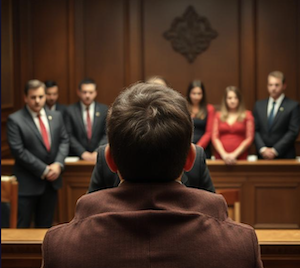 If you’re considering taking your civil case to trial in Pennsylvania, you’ve done the cost-benefit analysis and above all, you hope that the trial will bring closure at the very least. But what if the trial cannot provide closure?
One of the major — and frustrating — risks of litigation is that a new trial can be ordered, often for reasons entirely beyond your control.
Why This Can Happen — Even with a Strong Case
A civil trial is not just about proving your case. It’s about following strict rules of courtroom procedure and ensuring both parties get a fair trial. Even with capable representation, things often go wrong. It could be juror misconduct, explained here. Or improper evidence being admitted. Or procedural errors. The list goes on and on. A judge may determine — for reasons beyond your control — that the trial has been compromised. If so, you — and your witnesses — must again take time away from work and family life, to engage in an expensive, time-consuming, and emotionally draining retrial.
An Example
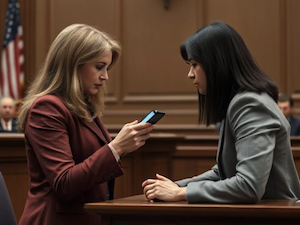 A recent case out of Philadelphia County, Hernandez v. Temple University Hospital, highlights this exact issue. Despite going through a full jury trial, the court ultimately granted the Defendant’s motion for a new trial, in part due to a seemingly minor — but legally significant — action by a juror: accessing the plaintiff’s attorney’s LinkedIn profile during trial.
In any trial, jurors are instructed not to do outside research, not to contact the parties or lawyers, and not to use social media to look up anyone involved in the case. Rather, jurors are supposed to decide the case based solely on admissible evidence in the courtroom.
In the Hernandez case, however, one juror looked up the plaintiff’s attorney on LinkedIn — a clear violation of the judge’s instructions. While it might seem harmless or even benign (after all, no direct message was sent), the court ruled that this conduct raised a reasonable likelihood of prejudice. The verdict was tossed out, and a new trial was ordered.
Factors Out of Your Control
The Hernandez case illustrates just one example where factors beyond your control cause the need for a new trial. Other example include:
-
- Jurors are unable to reach a verdict or a “hung jury,” since 10 of 12 jurors must agree for the trial to end. Think about all the division and disagreement in modern culture. At trial, even if 9 of 12 jurors agree, it’s not enough for a verdict. No verdict. No closure.
- Judicial errors in ruling on evidence or jury instructions.
- Someone talks to the media about a pending case. A witness, or one of the parties (even if not you or your lawyer), causing jurors to hear inadmissible information.
- Unintentional exposure to outside information: e.g., a juror uses her cell phone to go on the web and learns information about the case that’s not admissible, such as media reports or information on the case docket meant only for lawyers and judges.
- Toxic information improperly poison’s the jury’s perception of a party: a lawyer or witness cannot appeal purely to the juror’s emotions, alone. Such statements poison the jury’s perception of the case. For example, referencing one of the parties as a drug addict or child abuser might be true. However, it may be irrelevant to the case. In Mischik v. Anthony, 793 A.2d 957 (Pa. Super. Ct. 2002), new trial was granted in part due to improper arguments concerning one party’s alleged wealth and appeals to sympathy. See also Commonwealth v. Shaffer, 224 Pa. Super. 564, 307 A.2d 394 (Pa. Super. Ct. 1973).
In short, every trial is a potential “minefield” that can blow up, despite your best efforts to avoid disaster.
So What Can You Do?
If you’re a litigant considering trial, here are a few important considerations:
-
- Understand the risks. Trial is not a guaranteed end point — there’s always a chance the case could be retried. Or, the judge could be biased against you, but if the evidence supports a harsh ruling against you, you may have no recourse.
- Control risk through settlement. You should consider settlement of your dispute, even if you think your case is a “slam dunk.” Seriously consider mediation — in lieu of a jury trial.
- Follow the judge’s instructions carefully. If you’re a party to the case, be extremely cautious about your own conduct and presence online
- Prepare for a long haul. Even a “win” at trial may not be the final word if the opposing side files post-trial motions or appeals to the Superior Court.
Final Thoughts
Civil trials in Pennsylvania, like anywhere else, come with high stakes — and not just in terms of the verdict. As Hernandez v. Temple University Hospital shows, outside factors like juror misconduct can derail a verdict and lead to a new trial, even long after the courtroom drama seems to be over.
Settlement should always be considered, even though has risks of its own. And, if you’re preparing for trial, be sure to go in with eyes wide open. Justice might eventually be served — but it may take longer, and cost more, than you expect.
Let’s Get Started!
Contact one of our legal experts to advocate for your position in Western Pennsylvania!