
The Challenge of Expert Evidence
 The need for expert evidence can present an insurmountable obstacle to recovering money for a civil claim for damages in Pennsylvania.
In every such claim, you need to show that the defendant’s conduct caused the harm you suffered. In most cases, courts require proof of causation through testimony from an expert: a person with a specialized knowledge. Otherwise, your case can be dismissed.
When is Expert Evidence Needed?
Sometimes causation is obvious, like if someone punches you in the face, leaving a bruise. But in most other instances, a court will require expert evidence to show causation. In fact, certain cases — such as the increased risk of future harm doctrine — require it.
Examples
Below are instances — picked to show the sheer range of cases — where a court will require you to present expert evidence to prove your case:
 The Face Punching Scenario. How long should the pain from a “black eye” (bruise) last? And, did the punch cause a concussion or nerve damage? You’ll need a medical expert to testify on these issues. A judge won’t let you — or anyone else lacking a medical school degree — testify, here. You’ll need an actual medical doctor (MD), not a chiropractor — or even a nurse practitioner or physician assistant — to prove causation.
Construction Work. Perhaps your plumbing contractor — who accidentally broke a water pipe in your home — caused flooding-like damage to your entire home. Your claim is for negligence against a contractor. Here, a court will expect you to call another plumber — or better yet, an engineer — to testify to causation and the extent of damage from water.
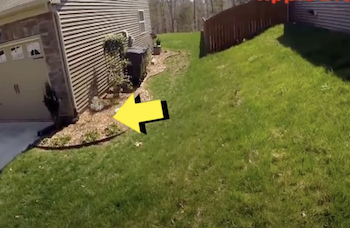 Neighbor’s Water Entering Your Property. Let’s say your neighbor caused his property to drain water downhill onto yours. Then, you immediately notice some new cracks in your foundation. Here, you’ll need an expert to prove causation and the extent of damage.
As one can see from the breadth of these examples, when in doubt, assume you need an expert’s opinion to prove causation or damages.
So then, what constitutes good expert evidence?
The Expert Evidence Needed
To prove causation through expert evidence, you need three things: (1) a witness with certain qualities, (2) an opinion with certain qualities, and (3) money, to pay the expert.
The Quality of Expert
To serve as an “expert” in Pennsylvania, the witness need only have “any reasonable pretension to specialized knowledge on the subject under investigation. If he does, he may testify and the weight to be given to such testimony is for the trier of fact to determine,” See Miller v. Brass Rail Tavern, Inc., 541 Pa. 474, 480-81, 664 A.2d 525, 528 (1995). See also Pa.R.E. 702.
But note, an expert providing a medical opinion — including the standard of care and causation and the nature and extent of the injury — must … “possess an unrestricted physician’s license to practice medicine in any state or the District of Columbia.” See the MEDICAL CARE AVAILABILITY AND REDUCTION OF ERROR (MCARE) ACT.
Your trial judge has discretion to disqualify your expert, putting you at the mercy of an appellate court, which might not grant a new trial, if the original trial judge throws out your case.
Thus, you should err on the side of having an overqualified expert, when possible.
The Quality of Opinion Needed
Your expert need not opine to an absolute certainty that the defendant’s conduct caused your harm. Rather, the opinion need only be “to a reasonable degree of professional certainty,” that the Defendant’s conduct caused your damages. That said, it’s not enough for an expert to say it was: “more likely than not” that Defendant’s conduct caused your damage.
Payment for Testimony
Even if your lawyer advances costs for experts, those expenses get subtracted from the recovery you receive, ultimately. Thus, you pay, either way. And expert reports and testimony are not cheap. The expert report, alone, can cost $500 to $2,500 or more, before any testimony is given. Expert testimony — at a deposition or trial — can run from $3,500 to over $10,000 depending on the type of expert and time spent testifying.
Fortunately, many lawyers look for creative solutions to save money. For example, if your case involves medical treatment, your medical records may contain opinions to establish causation, to be used in negotiation.
But you still have to pay the expert to testify live. For example, you can use a subpoena to compel an expert to testify at trial to facts (the treatment he rendered, for example), but not his expert opinions.
For those, you need to pay his going rate.
Other Limitations
There are two other important limitations.
- Your Expert Cannot Testify to the Law. First, your expert can testify to the amount of damages, and what caused those, but not the law governing the case. In Major v. Five Star Equipment, Inc., No. 2020-CV-3550 (C.P. Lacka. Co. Nov. 15, 2024 Nealon, J.), Plaintiff’s accident reconstruction expert was prohibited from providing testimony or expressing any opinion regarding the governing law pertaining to the duties of pedestrians and motorists at intersections or within crosswalks.
- Limits to Defendant’s Admissions. Even if the defendant’s expert concedes that that an event caused “some degree” of harm to the Plaintiff, this does not relieve the Plaintiff of his burden to prove causation through his own expert. See Gross v. Villeneuve, No. 2:23-CV-00705-NBF (W.D. Pa. Jan. 22, 2025 Fischer, S.J.), citing to Andrews v. Jackson, 800 A.2d 959, 962 (Pa. Super. 2002) (Plaintiff must prove that the Defendant’s conduct caused — or was a “substantial factor” in contributing to the Plaintiff’s damages, even if “some degree” of causation is admitted).
The Rare Exception:
When Causation Is “Obvious” and No Expert Is Required
Pennsylvania law does recognize a narrow exception. Expert testimony is not required when the causal connection is either:
- immediate and direct, or
- the natural and probable result of the defendant’s act, and the connection is “so closely connected and so readily apparent that a layman could diagnose (except by guessing) the causal connection.”
See Smith v. German, 434 Pa. 47, 51 (1969); Tabuteau v. London Guarantee & Accident Co., 351 Pa. 183 (1945); Lattanze v. Silverstrini, 448 A.2d 605 (Pa. Super. 1982).
A very recent Schuylkill County case (September 2025) shows exactly how this very narrow exception works in practice.
Recent Example: Dunkel v. Dallago (September 5, 2025)
In Dunkel v. Dallago – Court of Common Pleas of Schuylkill County (September 5, 2025), the plaintiff was hit by a driver who admittedly ran a red light. The plaintiff claimed injuries to her neck, mid-back, and both knees. She had pre-existing problems with her neck, back, and left knee. The defense moved for summary judgment, arguing that because of the prior injuries, the plaintiff had to produce an expert medical report proving which symptoms were caused or aggravated by this crash.
The Honorable William L.J. Burke denied summary judgment, writing:
“[W]hether Plaintiff can establish a causal connection [so that] her injuries are ‘immediate and direct’ or ‘the natural and probable result’ of the motor vehicle accident, and whether same may be proven without benefit of expert testimony, through clear and convincing testimony of Plaintiff, remains an issue for resolution by the trier of fact…”
In other words, if the plaintiff can convince a jury that her new complaints started the same day as the crash, are in the areas that were hit, and are the kind of injuries laypeople expect from a car crash (e.g., whiplash-type neck pain, bruised knees), then Pennsylvania law still allows the case to go to a jury without an expert.
But notice three critical takeaways from Judge Burke’s opinion:
- The exception is decided case-by-case by the judge or jury — it is not a free pass.
- Pre-existing conditions or any delay in symptoms almost always destroy the exception and force you to hire an expert.
- Even when the exception arguably applies, many defense lawyers (and some judges) will still fight you tooth-and-nail, forcing you to spend money defending motions just to keep the case alive.
The Bottom Line in Pennsylvania
Here are four (4) key take aways:
- On the Plaintiff-side, if your injuries or damages (to your property or otherwise) are anything beyond the most trivial and immediately obvious, budget thousands (often tens of thousands) of dollars for expert reports and testimony — money you pay whether you win or lose
- On the Defense side, your defense may require expert evidence to prove, if you’re raising a question beyond the average person’s understanding.
- There numerous potential causes of damage exist, experts are typically needed to sort it out. So for example, if you have any pre-existing condition in the same body part, or if symptoms did not appear instantly, the “obvious causation” exception is almost certainly gone. The same goes for a property damage issue: was it negligent construction? Or faulty material (not the contractor’s fault)?
- Many excellent cases with real merit are never filed, or are dismissed early, simply because the plaintiff cannot afford the experts Pennsylvania law demands.
So, before you pay a lawyer a retainer, ask two blunt questions:
- “Will my case — or defense — require one or more experts to survive summary judgment?”
- “How much will those experts cost, and will your office advance those costs?”
The answers will tell you, faster than anything else, whether your claim is economically viable in the Pennsylvania civil justice system.
Because in many cases, the real enemy is not the opposing party — it’s the expert testimony rule itself.
Let’s Get Started!
Contact us to understand your rights in Western PA today!
412.342.0992